|
|
Last Modified on Jan 23, 2026
Getting caught in a California rainstorm or fog bank is stressful enough without wondering if the weather suddenly makes you responsible for a crash that wasn’t really your fault. How weather conditions impact liability in auto accidents in California is a question that comes up constantly, especially when insurance companies start pointing fingers. And the truth is, bad weather doesn’t automatically let anyone off the hook (even though that’s what some drivers think).
But here’s the thing: California law still expects reasonable caution regardless of conditions. The team at Gonzales Law Offices has seen countless cases where understanding this weather-liability connection made all the difference. You’ll get clear answers on what actually affects your case, how insurance handles these situations, and what steps protect you when conditions turn dangerous.
Weather and Liability in California Auto Accidents
Key Takeaways
- California law requires drivers to adjust their speed and driving behavior based on current weather conditions, not just posted speed limits
- Bad weather doesn’t automatically excuse driver negligence – you’re still expected to maintain reasonable control of your vehicle
- Under pure comparative negligence rules, multiple parties (including you) can share fault in weather-related accidents
- Poor vehicle maintenance, especially worn tires and faulty lights, can significantly increase your liability in adverse weather crashes
- Government entities may be liable for accidents caused by poor road drainage or maintenance, but strict filing deadlines apply
Understanding Weather-Related Legal Responsibilities in Auto Accidents
Here’s what happens when weather enters the picture. Most people think rain, fog, or ice somehow creates a get-out-of-jail-free card for car accidents. Not in California. The law still holds you responsible for operating your vehicle safely, regardless of conditions.
California operates under what’s called pure comparative negligence. This means even if the weather was terrible, if you contributed to the accident, you’ll be held accountable for your percentage of fault. Say it’s pouring rain, you’re going the speed limit, but you rear-end someone because you couldn’t stop in time – you’re likely at fault. The rain doesn’t change that basic responsibility.
The thing is, weather conditions actually intensify your duty of care as a driver. When visibility drops or roads get slick, you’re expected to respond appropriately by:
- Reducing your speed below posted limits if necessary
- Increasing following distance significantly
- Turning on headlights (even during the day in rain, per California law)
- Pulling over if conditions become truly hazardous
And people who tell you “the other driver hit me, it was just the weather” – well, that’s rarely the whole story. The California Department of Motor Vehicles makes it crystal clear that weather conditions don’t eliminate driver responsibility, they amplify it.
California Vehicle Code and Weather-Induced Negligence
California Vehicle Code Section 22350. That’s the Basic Speed Law, and honestly, it’s one of the most misunderstood rules out there (probably because it’s so simple people overlook it). The law states you can’t drive faster than is “reasonable or prudent” given current conditions – weather, traffic, road surface, everything.
Posted speed limit says 65 mph? Doesn’t matter if there’s heavy fog and you can only see 50 feet ahead. You’re legally required to slow down. I’ve seen countless cases where drivers got citations and were found liable because they were technically “following the speed limit” but driving way too fast for conditions. The California Legislative Information website has the full text, but here’s the practical reality: if you can’t stop within the distance you can see, you’re going too fast.
Now here’s where it gets tricky.
Vehicle Code Section 22350 puts the burden on YOU to evaluate conditions and adjust accordingly. The officer investigating your accident will look at skid marks, stopping distance, and damage patterns to determine if you were driving at a safe speed for the weather. “I couldn’t see because of the rain” actually proves the point – you were going too fast to stop safely given your limited visibility, which means you violated the Basic Speed Law. See how that works against you?
The Role of Vehicle Condition and Safety Equipment in Bad Weather
Worn tires on wet roads. That’s a liability disaster waiting to happen, and I see this all the time with people who’ve been putting off maintenance. Your tire tread depth matters exponentially more when it’s raining because those grooves channel water away from the contact patch. Bald tires? You’re essentially hydroplaning at lower speeds, and that’s 100% preventable negligence on your part.
The National Highway Traffic Safety Administration recommends replacing tires when tread depth reaches 2/32 of an inch, but honestly, you want way more than that for California’s winter rains.
Here’s the practical test: stick a penny into your tire tread with Lincoln’s head upside down – if you can see the top of his head, your tires are legally worn out in many jurisdictions and definitely not safe for wet conditions.
But it’s not just tires (though those are critical). Your headlights, taillights, brake lights, turn signals – all of this becomes evidence in a liability determination. If your brake lights weren’t working during a foggy morning accident, guess who’s getting a larger share of fault? You are. Because the other driver couldn’t see you slowing down, which they would have if your vehicle was properly maintained.
Windshield wipers, defrosters, even your tire pressure (which drops in cold weather, affecting handling). These aren’t optional maintenance items. They’re legal requirements that directly impact your liability when weather conditions deteriorate. The California Vehicle Code requires all safety equipment to be in proper working condition, and insurance adjusters will absolutely check maintenance records when weather was a factor.
Evaluating Fault and Comparative Negligence in Weather-Related Incidents
Proving fault gets complicated fast when weather’s involved. Multiple parties often share responsibility. The rear-ending driver for following too close, the middle car for sudden braking, the lead vehicle for malfunctioning brake lights, maybe even the government for poor drainage that caused standing water. California’s comparative negligence system handles this by assigning percentages of fault to each party.
Let me explain how this plays out in real situations. You’re driving in heavy rain, doing everything right – appropriate speed, proper following distance, headlights on. Another driver merges into your lane without signaling, causing you to brake hard. The car behind you can’t stop in time and rear-ends you, which pushes you into the car that merged. Who’s at fault?
The answer: probably everyone to some degree. The merger might be 60% at fault for the unsafe lane change. The rear driver might be 30% at fault for following too closely given the conditions. You might be 10% at fault for (I don’t know, maybe your brake lights were dim). The California Courts system sorts this out through investigation, witness statements, physical evidence, and expert testimony.
The practical impact: if you suffered $100,000 in damages but you’re found 10% at fault, you can only recover $90,000 total from the other parties. That 10% comes out of your pocket. This is why documentation matters so much – photos of conditions, weather reports, witness contact information, everything that establishes what was reasonable under the circumstances.
And here’s something people don’t realize until it’s too late. Your own insurance company might fight you on comparative negligence percentages because it affects their payout obligations. They’ll argue you were more at fault than you think. Having detailed evidence of the weather conditions and your reasonable response to them becomes your defense against inflated fault percentages.
Insurance Considerations in Weather-Induced Auto Accidents
Insurance companies love weather-related accidents. Why? Because they can argue the weather was an “act of God” or that you contributed to the accident through your response to conditions. Every weather-related claim gets extra scrutiny, trust me on this.
When you file a claim involving adverse weather, the adjuster will request:
- Weather reports from the time and location of the accident
- Your maintenance records (especially tires)
- Photos of the scene showing road conditions
- Police reports noting weather as a factor
- Witness statements about visibility and road conditions
But (and this is huge) the California Department of Insurance requires insurers to handle claims in good faith. They can’t just deny your claim because it was raining. They need actual evidence that you were negligent given the conditions. If you were driving appropriately for the weather and still got hit by someone driving recklessly, their insurance owes you compensation regardless of the weather.
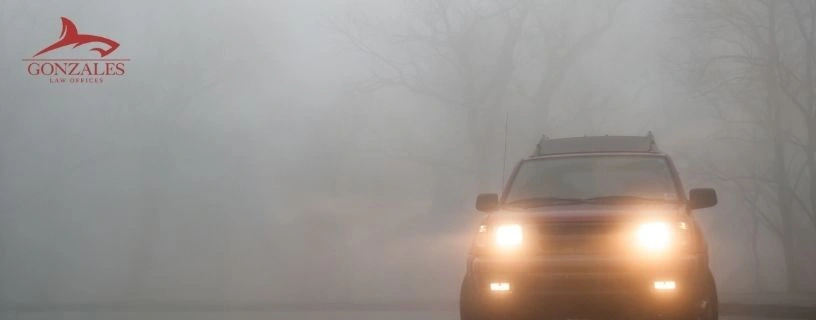
Fog-related accidents are particularly contentious. Insurance companies will argue you should have pulled over completely if visibility was severely limited. Sometimes that’s true – if you literally cannot see, you probably should pull off the road safely. But what about situations where visibility varies, or there’s nowhere safe to pull over? These become fact-specific disputes where legal standards for reasonable behavior under the circumstances really matter, and documentation of exactly what conditions existed becomes critical to your claim’s success or failure because without it you’re just arguing your memory against an adjuster’s predetermined conclusion.
Flood-related accidents? Different ballgame entirely. Driving through standing water (especially flooded roadways) is often considered inherently negligent. Your insurance might deny coverage altogether if you deliberately drove into a flooded area.
The Impact of Poor Road Conditions and Government Fault
Government liability for road conditions exists. It’s real. And it’s something people overlook constantly when bad weather reveals underlying infrastructure problems. That pothole that’s been there for months? The storm drain that’s been clogged all season? The faded lane markings you couldn’t see in the rain? Potentially government liability.
Caltrans and local municipalities have a duty to maintain roads in reasonably safe condition. When they fail and it contributes to your accident, you can file a claim against the government entity responsible. The California Government Claims Act governs this process, and the timeline is brutal – you typically have only six months from the date of injury to file your initial claim with the government entity.
Here’s what you need to prove:
The government knew (or should have known) about the dangerous condition. Someone reported that flooded underpass three times before your accident? That’s constructive knowledge. The drainage problem existed for years? Even better evidence.
The condition created an unreasonable risk. Minor imperfections don’t count – roads don’t have to be perfect. But significant hazards that a reasonable road maintenance program would have addressed? That’s actionable.
The condition was a substantial factor in causing your accident. This is where weather and government liability intersect. The heavy rain didn’t cause your accident – the rain combined with the government’s failure to maintain adequate drainage caused the accident.
But here’s the catch. Government entities have significant immunities and defenses. They can argue discretionary immunity (they chose how to allocate limited maintenance budgets), or that the condition wasn’t dangerous, or that your driving was the real cause regardless of road conditions. Successfully pursuing these claims usually requires legal assistance because the procedural requirements are strict and the defenses are strong.
FAQ: Weather and Liability in California Auto Accidents
How does bad weather impact liability in California auto accidents?
Depends. Bad weather doesn’t automatically get you off the hook – you’re still expected to drive safely for the conditions. If you’re going too fast for rain or fog, you’re likely at fault even if you were under the speed limit. California’s pure comparative negligence means weather is just one factor they’ll consider when dividing up fault.
What are the driver responsibilities during rainy conditions in California?
Slow down, turn on your headlights, and leave way more space between cars. You’re legally required to adjust your speed to what’s safe, not just stick to the posted limit. Worn windshield wipers or bald tires? That’s on you if things go sideways.
How does the California Vehicle Code 22350 apply to bad weather driving?
It’s the Basic Speed Law – basically says you can’t drive faster than is safe for current conditions, regardless of the speed limit. Posted 65 mph but there’s heavy rain? You better be going slower or you’re violating 22350. Cops can cite you even if you weren’t speeding.
What role does comparative negligence play in weather-related accidents?
California splits fault based on everyone’s actions. Maybe the other driver rear-ended you in rain, but your brake lights were out – you might be 20% at fault, they’re 80%. Your settlement gets reduced by your percentage. Pretty straightforward, actually.
Can you file an insurance claim for accidents due to fog in California?
Yeah, of course. Fog doesn’t prevent you from filing – it’s just another accident claim. The question is whether the fog was so bad you should’ve pulled over, or if someone else wasn’t using headlights properly. Your insurance will still process it either way.
How do worn tires affect liability during wet conditions?
Hugely. If your tires are bald and you hydroplane, that’s neglecting basic maintenance. Shows you weren’t taking reasonable care, which makes you way more liable. Insurance adjusters and lawyers will absolutely check tire tread depth after weather-related crashes.
What are the steps for filing a government claim for road hazards?
They’re not as simple as regular claims. You’ve got six months from the incident to file a formal claim with the government entity (city, county, or Caltrans). Use their specific forms, document everything, and expect pushback – they fight these hard. Miss that six-month window and you’re probably done.
How do safety equipment requirements change in adverse weather?
Not really “change” – you’re always supposed to have working lights, wipers, and tires. But in bad weather, cops are stricter about enforcing these, and liability-wise, having broken equipment during a storm looks terrible for your case. Working headlights in fog aren’t optional, they’re legally required.
How does poor road maintenance influence accident liability?
Look, people blame potholes and drainage all the time, but proving the government knew about the hazard and ignored it is tough. You’ll need photos, maintenance records, prior complaints – real evidence. Sometimes poor roads do contribute to fault, but the driver usually shares blame for not adjusting to visible conditions. California Government Code sections 835-840.4 cover this stuff if you want the legal details.
Gonzales Law Offices: Your Auto Accident Law Firm
Weather doesn’t automatically excuse a driver from liability. That’s the bottom line. California courts expect everyone to adjust their driving when conditions deteriorate – and we’ve seen countless cases where failure to slow down or use proper caution in rain or fog led to preventable collisions. The insurance companies know this too, which is why they’ll fight your claim by arguing weather played a bigger role than driver negligence. Don’t let them.
If you’ve been injured in a weather-related accident, evidence collection starts immediately – photos fade, witnesses forget, road conditions change. We build cases on the details others overlook. Contact our firm today to discuss your situation and protect your rights.
California Car Accident Resources:

 Se Habla Español