



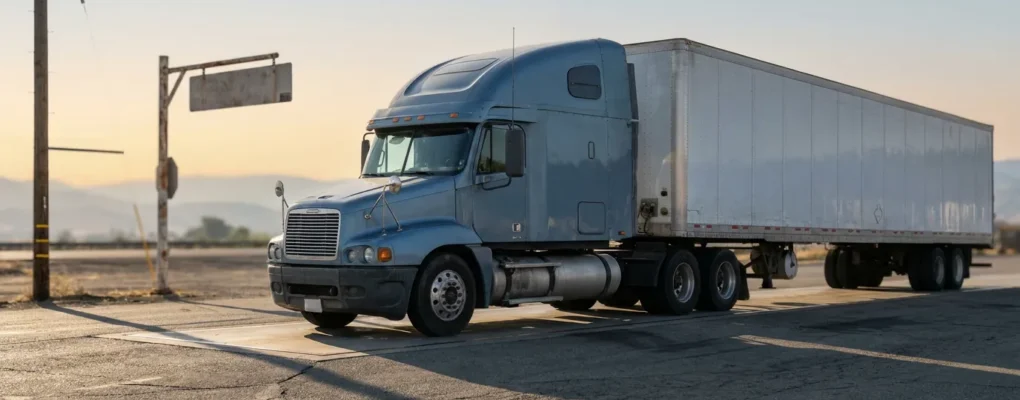

Why Truck Insurance Minimums Matter After a California Big-Rig Crash
Key Takeaways: In California, most semi trucks hauling general freight must carry at least $750,000 in combined single limit liability coverage under California Vehicle Code § 34631.5. Carriers that run only vehicles under 10,000 pounds GVWR need $300,000. Minimums rise for dangerous cargo: $1,200,000 for intrastate bulk petroleum carriers using a combined single limit, $1,000,000 for oil and general hazardous materials, and $5,000,000 for high-risk hazmat. Carriers must file proof of coverage with the DMV to get and keep a permit. If coverage lapses, the permit is generally suspended. Interstate carriers must also meet federal FMCSA minimums under 49 CFR Part 387. These minimums are only a floor, and serious injury claims may reach excess policies or other liable parties. Victims should get medical care quickly, save evidence, and remember California’s two-year deadline for most personal injury lawsuits. Claims against government entities usually require an administrative claim within six months.
In California, most semi trucks hauling general freight must carry at least $750,000 in liability coverage. The minimum rises to $1,000,000 or more, up to $5,000,000, for petroleum and hazardous materials. The amount depends on the cargo, the vehicle’s weight, and whether the carrier crosses state lines. The trucking company’s insurance policy is often the main source of payment after a severe crash.
If a commercial truck crash has upended your life, Bufete Gonzales can review your situation and explain your options. Call 909-552-1401 o contact us now for a consultation. Our team often works with Spanish-speaking clients and families.
How California Law Sets Semi Truck Insurance Requirements
California’s insurance rules for motor carriers of property are found mainly in California Vehicle Code §§ 34630, 34631, and 34631.5. These laws set the minimum coverage a carrier needs before it can legally drive on state highways. The full text of these motor carrier financial responsibility laws is available from the California Legislature. Many trucking companies carry more than the minimum.
The $750,000 Baseline for Most Big Rigs
Under California Vehicle Code § 34631.5(a)(1), most California motor carriers of property must carry at least $750,000 in combined single limit liability coverage. That coverage pays for bodily injury, death, or damage to property other than the cargo, for one or more claimants in any one accident. "Combined single limit" means one total amount covers all injuries and property damage from the crash, so several injured people may all be claiming against that one limit.
Lower Limits for Lighter Commercial Vehicles
Lighter commercial vehicles have a lower minimum. Under California Vehicle Code § 34631.5(a)(2), carriers that run only vehicles under 10,000 pounds gross vehicle weight rating, and that do not haul petroleum or hazardous materials, need $300,000.
Higher Limits for Petroleum and Hazardous Materials
Carriers that haul dangerous cargo must meet higher minimums. Under California Vehicle Code § 34631.5(a)(3), intrastate carriers that haul petroleum products in bulk, including waste petroleum, need either split limits or a combined single limit. The split limits are at least $500,000 for bodily injury per person, $1,000,000 per accident, and $200,000 for property damage. The combined single limit option is at least $1,200,000.
Under California Vehicle Code § 34631.5(a)(4), hazardous materials carriers must meet minimums that match the federal levels in 49 CFR Part 387. Generally, that means $1,000,000 for oil and for general hazardous materials or hazardous waste. It means $5,000,000 for hazardous substances or compressed gas carried in tanks over 3,500 water gallons, any amount of division 1.1 to 1.3 explosives, poison gas, or highway-route-controlled quantities of radioactive material.
| Carrier Type | Minimum Coverage | Authority |
|---|---|---|
| Most property carriers (typical semi truck) | $750,000 combined single limit | Cal. Veh. Code § 34631.5(a)(1) |
| Vehicles under 10,000 lbs GVWR, no petroleum or hazmat | $300,000 | Cal. Veh. Code § 34631.5(a)(2) |
| Intrastate bulk petroleum carriers | $1,200,000 CSL, or split limits | Cal. Veh. Code § 34631.5(a)(3) |
| Oil, general hazmat, or hazardous waste | $1,000,000 | Cal. Veh. Code § 34631.5(a)(4) |
| High-risk hazmat (large tanks, explosives, poison gas, certain radioactive material) | $5,000,000 | Cal. Veh. Code § 34631.5(a)(4) |
How Carriers Prove Coverage and Keep It Active
Under California Vehicle Code § 34630(a), California will not issue a motor carrier permit to a carrier of property until it files proof of insurance with the DMV. The required coverage must generally apply to any vehicle that needs a permit, even if the policy does not name that vehicle. Coverage disputes still depend on the policy terms and the facts.
Under California Vehicle Code § 34631, a carrier can prove coverage by filing one of several types of documents with the DMV:
- A certificate of insurance from an insurer licensed in California, or an eligible nonadmitted insurer
- A bond from a licensed surety company
- Proof that the carrier qualifies as a self-insurer
- For qualifying nonprofits, proof of coverage from a charitable risk pool
What Happens When Coverage Lapses
Under California Vehicle Code § 34630(b), coverage must stay in effect for as long as the motor carrier permit is active. The insurer cannot cancel the certificate of insurance on less than 30 days’ written notice to the DMV, unless the carrier stops operating as a permitted motor carrier. Under California Vehicle Code § 34630(c), if coverage lapses, the DMV suspends the carrier’s permit as of the lapse date unless the carrier shows valid coverage. To get the permit back, the carrier must pay a reinstatement fee and file proof of coverage.
These permit rules are separate from a civil injury lawsuit. A suspended permit does not by itself decide who caused a crash, though proof that a carrier operated without required coverage may matter in your claim.
💡 Pro Tip: If you can, get the truck’s DOT number, the carrier name on the cab door, and the driver’s insurance information at the scene. These details can help your attorney find the right policy and the carrier’s filing history.
Federal Rules for Interstate Trucking Companies
Trucking companies that cross state lines must also follow federal rules from the Administración Federal de Seguridad de Autotransportes. Under 49 CFR Part 387, for-hire interstate carriers of general freight in vehicles of 10,001 pounds or more generally must carry at least $750,000 in liability coverage. Carriers hauling oil generally need at least $1,000,000, and some hazardous materials carriers may need up to $5,000,000. For-hire interstate carriers must also file proof of insurance with the FMCSA.
Federal minimums apply to carriers in interstate commerce, including California-based carriers. Carriers that stay within California are generally governed by state rules enforced by the DMV and the California Highway Patrol.
What Semi Truck Insurance Requirements California Victims Should Know
Insurance minimums tell you what a carrier must carry, not what your claim is worth. Your payment depends on the facts of the crash, who was at fault, and the full extent of your losses. Under California’s comparative fault rules, your recovery may be reduced by any share of fault assigned to you. A few practical issues often come up:
- Serious injuries can exceed the minimum. Long-term care, lost earning capacity, and wrongful death damages can sometimes go beyond $750,000. Excess or umbrella coverage, or other liable parties, may need to be found.
- More than one party may be responsible. The driver, the motor carrier, a shipper, a maintenance company, or a parts maker may be liable, depending on what caused the crash.
- Insurers often move quickly. They may seek a recorded statement or offer an early settlement before you know the full extent of your injuries.
- Evidence can disappear. Electronic logging data, dashcam footage, maintenance records, and driver files may not be kept forever unless someone acts to save them.
💡 Pro Tip: Get medical care right away, even if you feel fine. Some injuries, such as concussions or internal injuries, may not show symptoms at first. Prompt records can also help link your injuries to the crash.
Building a Strong Truck Accident Claim
A negligence claim generally requires proof of duty, breach, causation, and damages. Useful evidence may include medical records, crash-scene photos, witness statements, police reports, the truck’s electronic data, and company records showing hours-of-service, inspection, or maintenance violations. An experienced semi truck insurance requirements lawyer can send letters demanding that evidence be saved, request carrier filings, and work to find policies that may apply. Results depend on each case’s facts, and no outcome can be guaranteed.
Filing deadlines also matter. Under California Code of Civil Procedure § 335.1, you generally have two years from the date of injury to file a personal injury lawsuit. Property damage claims generally have a three-year deadline under § 338. Claims involving a public entity generally require a government claim within six months of the crash under California Government Code § 911.2. Exceptions are limited, so acting early is important.
Preguntas frecuentes
1. What is the minimum insurance for a semi truck in California?
Most semi trucks hauling general freight must carry at least $750,000 in combined single limit liability coverage under California Vehicle Code § 34631.5(a)(1). Higher minimums apply to petroleum and hazardous materials carriers, and interstate carriers must also meet federal minimums.
2. Can I recover more than the trucking company’s policy limit?
In some cases, yes. More money may come from excess policies, other liable parties, or the carrier’s own assets, depending on the facts and coverage involved.
3. Does a lapse in the carrier’s insurance mean I cannot recover?
A lapse may make recovery harder, but it does not always end your claim. Under California Vehicle Code § 34630(b), insurers generally must give the DMV 30 days’ written notice before canceling a certificate of insurance, so coverage may still apply during that time. Other sources, such as your own uninsured motorist coverage or other liable parties, may also exist.
4. Should I speak with the trucking company’s insurer?
You generally do not have to give a recorded statement to the other side’s insurer. The insurer may use early statements to downplay your injuries, so many victims speak with an attorney first.
5. How long do I have to file a truck accident lawsuit?
California generally allows two years for personal injury claims under California Code of Civil Procedure § 335.1. Claims against government entities generally require an administrative claim within six months.
Protecting Your Rights After a Big-Rig Crash
California’s semi truck insurance requirements exist because big-rig crashes can cause severe harm. Most carriers need at least $750,000 in coverage, and the minimums rise for petroleum and hazardous cargo. Even so, trucking insurers often work to limit what they pay. Knowing these rules, saving evidence, and getting medical care quickly can help protect your claim. You can learn more in our truck accident legal resources.
If you or a loved one was hurt in a semi truck crash, Bufete Gonzales can help you understand your rights and seek payment from everyone responsible. Call 909-552-1401 o schedule your consultation today. Hablamos español, and we welcome Spanish-speaking clients and families.
Disclaimer: This content is for informational purposes only and is not legal advice. Every case is unique, and results may vary. Consult an attorney about your specific situation.